

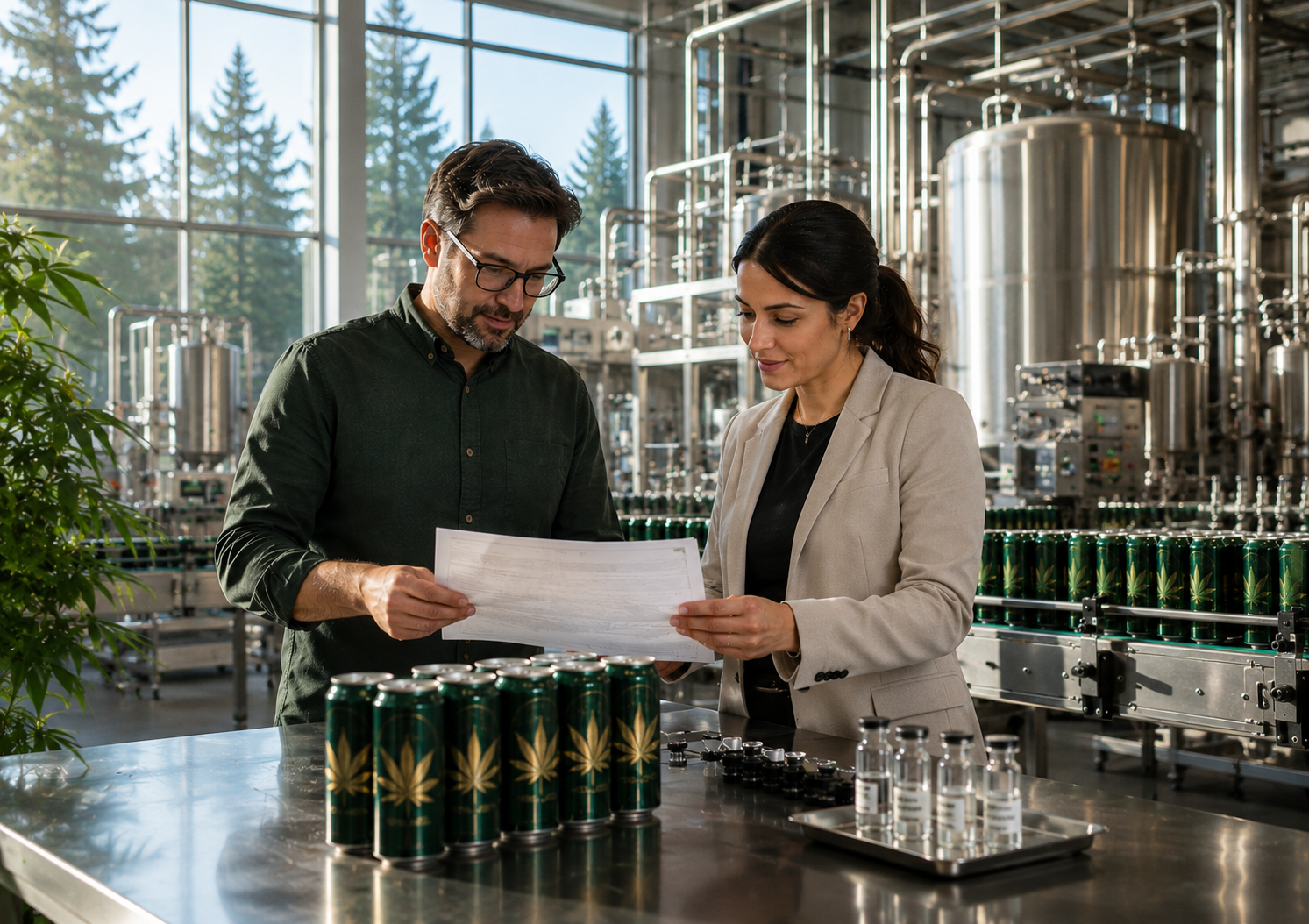
Start With Licensing and Regulatory Fit
Start With Licensing and Regulatory Fit
The licensing question depends entirely on what you're making and where you're selling it.
State-legal cannabis beverages must be manufactured by a licensed processor in the state where they'll be sold. In Washington, that's an I-502 processor license. In Oregon, it's an OLCC production license. Every state has its own framework, and you cannot ship cannabis products across state lines. If you're entering a specific state recreational market, your co-manufacturer must hold that state's license, no exceptions.
Hemp-derived THC beverages don't always require a state cannabis license to manufacture, since they're federally legal under the Farm Bill. But "federally legal" doesn't mean "unregulated." Your manufacturer still needs to meet FDA food safety standards, and individual states are increasingly adding their own requirements for hemp THC products: retail restrictions, testing mandates, labeling rules, and dose limits that vary by state.
Regardless of which side of the line your product falls on, ask:
- How long have they been producing cannabinoid beverages? Years of production history means they've dealt with audits, regulatory changes, and the real-world problems that don't show up in a capabilities brochure.
- Are they food-safety inspected? Cannabis beverages are food products. Your manufacturer should be inspected by the relevant state food safety authority, not just holding a cannabis license.
- Do they handle compliance reporting? For state cannabis, that means seed-to-sale tracking systems. For hemp, that means COAs, testing documentation, and labeling that meets the patchwork of state-level rules.


